
Building a Coordinated Home Decor Collection Without Too Many SKUs
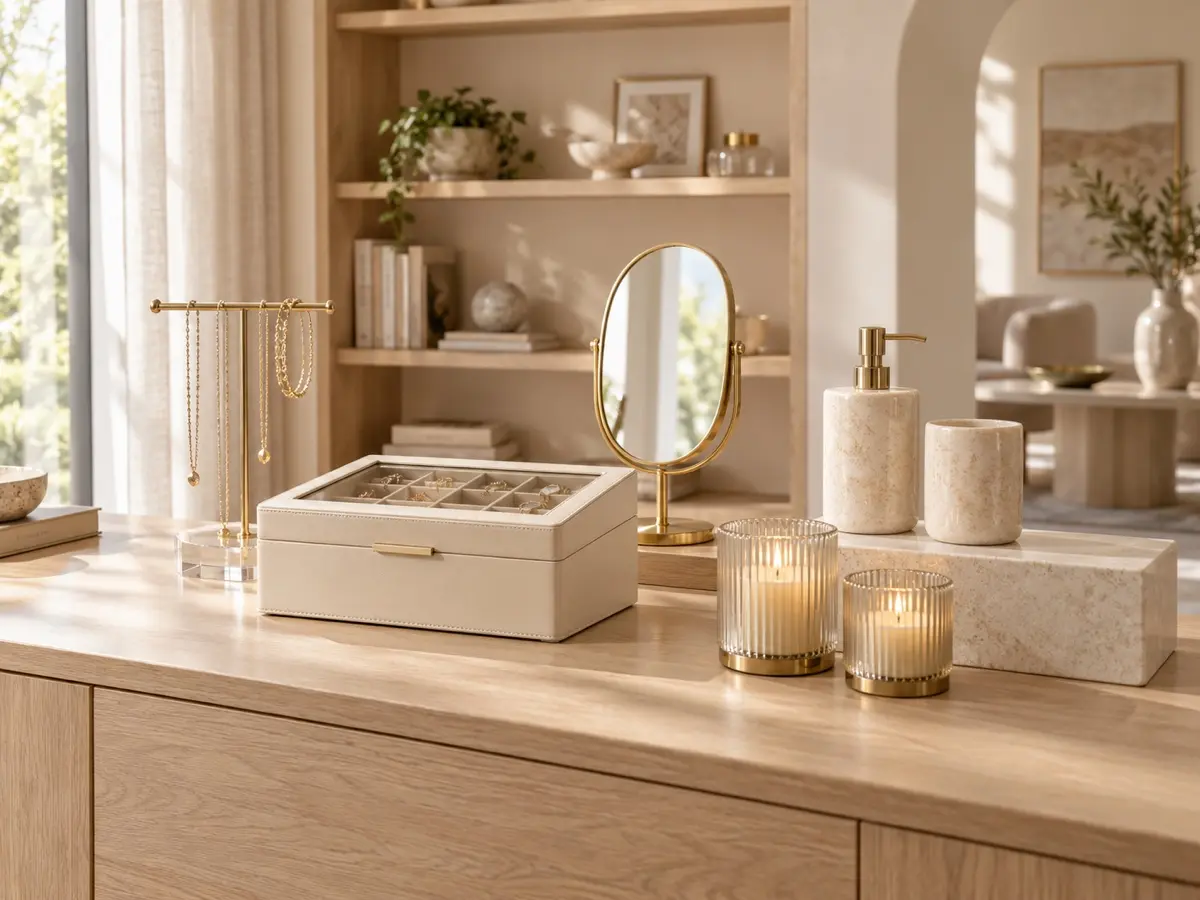
A collection can feel coordinated without making every item identical. A mirror, tray, candle holder and jewellery box may share a finish or a repeated curve while serving different purposes. For buyers, the challenge is to create that visual connection without multiplying stock-keeping units faster than the business can support them.
Choose a small set of visual rules
Begin with a short design brief covering the dominant colour, metal tone, surface texture and shape language. Identify which details must match and which can vary. For example, a warm metal finish might connect the collection while glass, ceramic and fabric introduce different textures.
Do not approve each item from an isolated photograph. Review the physical samples together under consistent lighting. A brushed surface and a polished surface can read differently even when both are described as the same colour. Agree a reference sample for the details that need to remain consistent.
Assign a commercial role to each piece
Separate the assortment into an accessible entry item, a core functional piece and a more distinctive statement product. This is a planning framework, not a promise about sales performance. It helps the buying team explain why each item belongs and where the price differences come from.
A compact tray could introduce the look; a divided storage box could provide the practical centre of the range; a decorative mirror could give the display height. If two proposed items perform the same job at almost the same size and price, consider whether both are needed at launch.
Consider how the pieces will be sold
A store display, an online collection page and a gift bundle each need different information. Check that larger items do not obscure smaller ones in a physical display. For online use, prepare consistent image angles, colour names and dimensions. If products can be bought as a set, define the contents and identify any items shown only as styling props.
Plan replenishment before adding variants
- Compare minimum quantities by item, finish and packaging version.
- Ask which components can be shared without limiting the design.
- Record carton quantities and packed dimensions for each SKU.
- Keep sample approvals and finish references linked to the item code.
- Review actual sales and returns before extending the range.
Shared components can simplify development, but they do not automatically mean shorter lead times or a lower minimum order. Confirm those details for the specific project. Browse the GadelyHome collections and send a selection brief with your proposed range, sales channel and target price structure.